Île de Ré
An Officer and a SpyÎle de Ré was a prison stop in Alfred Dreyfus’s passage from imprisonment in Paris to exile overseas. The records connect it with both the hostility that met him during his transfer and the tightly controlled farewell visit with Lucie Dreyfus before his departure aboard the Saint-Nazaire.
Setting and transfer
Twelve days after the degradation ceremony, Dreyfus was taken from his Paris prison at night and sent by train through snowbound countryside to the Atlantic coast. At La Rochelle, a crowd waited and shouted insults and threats; his guards delayed moving him until nightfall. The file then identifies Île de Ré as a prison where he was held before his onward journey.
A letter dated 21 January 1895 gives Dreyfus’s response to the abuse at La Rochelle. He wrote to Lucie Dreyfus that he had wanted to confront the crowd and declare his innocence, even at the cost of his life. The episode places the island within a passage marked by public hostility on one side and Dreyfus’s insistence on his innocence on the other.
The controlled farewell
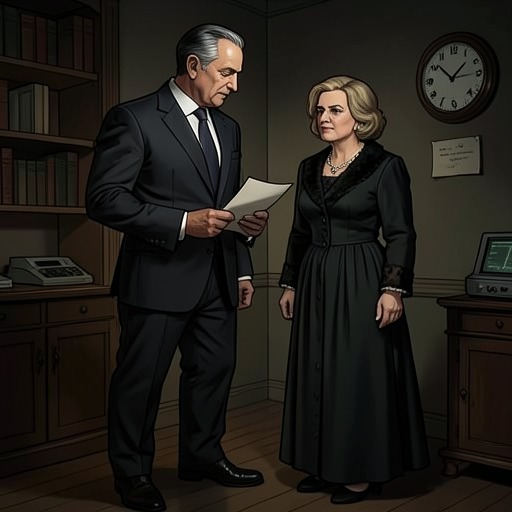
Lucie Dreyfus wrote to the minister seeking permission to visit her husband on Île de Ré and say goodbye. Permission was granted for 13 February, but under stringent conditions: Dreyfus had to stand between two guards at one end of the room, while Lucie remained seated at the other with a third guard beside her. The prison governor was to stand between them; they could not discuss the trial or touch.
Lucie offered to have her hands tied behind her back if that would allow her to approach her husband more closely. The request was refused. The restrictions made the visit a farewell in form as well as circumstance: even physical proximity was treated as something to be controlled.
Departure and significance
Letters exchanged after the meeting preserve its emotional weight without changing the limits imposed on it. Dreyfus wrote that the few moments together had brought him joy, though he could not tell Lucie all that was in his heart; he also praised her character and devotion. Lucie described the shock of seeing him again. Hours after Dreyfus’s letter of 21 February, he was aboard the Saint-Nazaire, steaming into the Atlantic.
Île de Ré thus marks the brief interval between Dreyfus’s transfer through a hostile public scene and his removal by sea. The prison’s documented importance lies not in a detailed account of its ordinary routines, which the record does not provide, but in the guarded farewell that separated husband and wife before the next stage of his confinement.